Roof rat populations in Tucson concentrate heavily along neighborhoods with mature vegetation and citrus canopies, including Sam Hughes, Broadmoor-Broadway, Blenman-Elm, and the historic riparian corridors near El…
Roof rat populations in Tucson concentrate heavily along neighborhoods with mature vegetation and citrus canopies, including Sam Hughes, Broadmoor-Broadway, Blenman-Elm, and the historic riparian corridors near El Presidio. Unlike native desert pack rats that build exterior middens on open desert floors near Saguaro National Park East, roof rats travel aerial utility lines, climbing oleander hedges, and drooping Mexican fan palm fronds to enter residential attics. Once inside, they strip foam pipe insulation, chew through high-voltage HVAC wiring, and soil fiberglass batt insulation with pheromone trails that draw additional colonies inside. A single female roof rat produces up to 40 offspring annually across 4 to 6 litters, turning a seasonal nesting site into an entrenched structural infestation within 60 days.
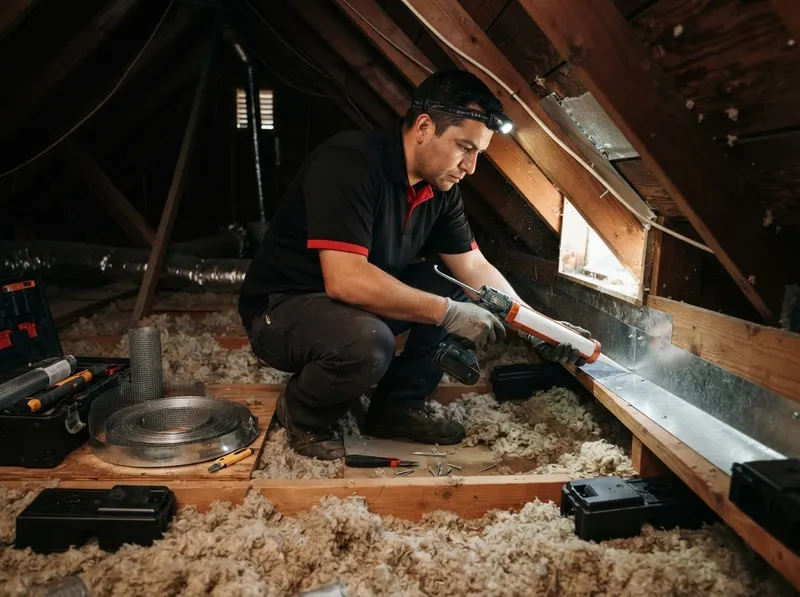
Structural protection demands rigid mechanical sealing rather than exterior rodenticides. In desert regions like the Catalina Foothills, Dunbar Spring, and Armory Park, baiting roof rats with anticoagulant rodenticides presents severe secondary poisoning hazards to predatory native raptors, domestic pets, and desert wildlife, while frequently causing rodents to die out of reach inside inaccessible drywall hollows. Crenvia Bug Specialists deploys industrial 19-gauge, 1/4-inch galvanized steel hardware cloth over attic gable louvers, dormer vents, and tile roof transitions. Technicians seal expansion gaps along Spanish barrel tiles using tailored mortar and metal flashings, eliminating entry points down to 1/2 inch in diameter. This physical barrier cuts off access permanently without requiring binding annual auto-renewal pest service subscriptions.
Attic remediation relies on heavy-duty mechanical snap traps set along primary interior travel paths, secured against roof joists, and inspected on a strict 48-to-72-hour cycle. In solar-equipped and high-efficiency homes throughout Civano and northern Tucson, roof rats routinely nest directly beneath rooftop solar panel arrays before entering attic soffits through plumbing penetrations and fascia roof joints. The operational sequence follows a strict three-phase protocol: 1. Complete exterior and roof-level inspection to locate rub marks, gnaw damage, and structural breaches; 2. Installation of exterior mechanical exclusion hardware and zero-poison interior snap trap lines; 3. Trap clearing, carcass extraction, biological sanitization of droppings using hospital-grade antimicrobial misting, and a final structural closure verification.
Every job gets a firm, written price after a free on-site visit.
Tell us about your roof rat attic exclusion and trapping job in Tucson and we'll send a clear, written quote, usually the same day.
 Crenvia Bug Specialists