Property owners seeking a reliable PEST CONTROL SEVICE in Tucson require direct defense against venomous desert arthropods, destructive wood-eating insects, and wiring-chewing desert rodents. Crenvia Bug Specialists delivers localized structural treatments designed for the extreme heat and caliche soils of Pima County.
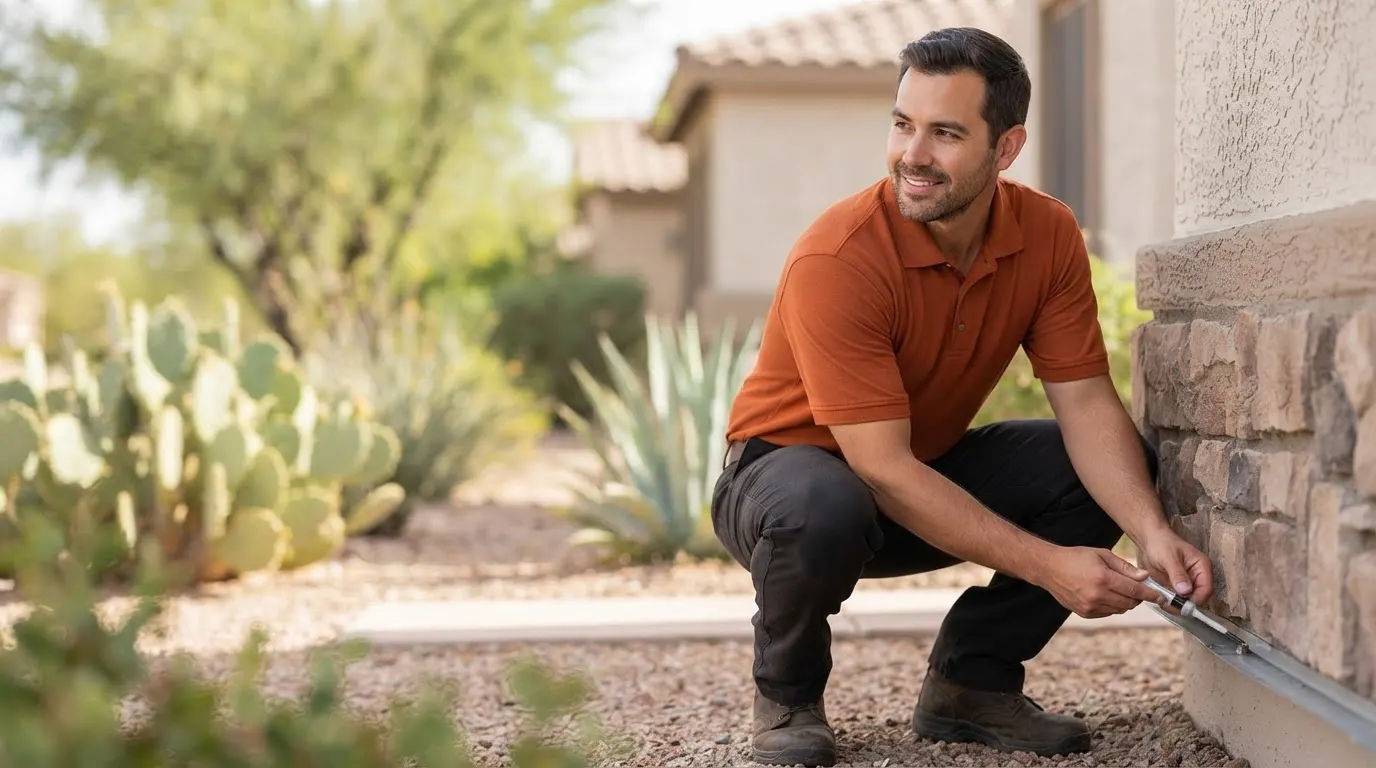
A professional PEST CONTROL SEVICE company in Tucson is an on-demand structural defense operation that inspects, identifies, and neutralizes desert arthropods, wood-destroying insects, and destructive desert rodents without requiring multi-year recurring auto-renew contracts.
Every service reflects the same meticulous attention to detail, whether it's a single job or a larger pest control sevice project across Tucson.
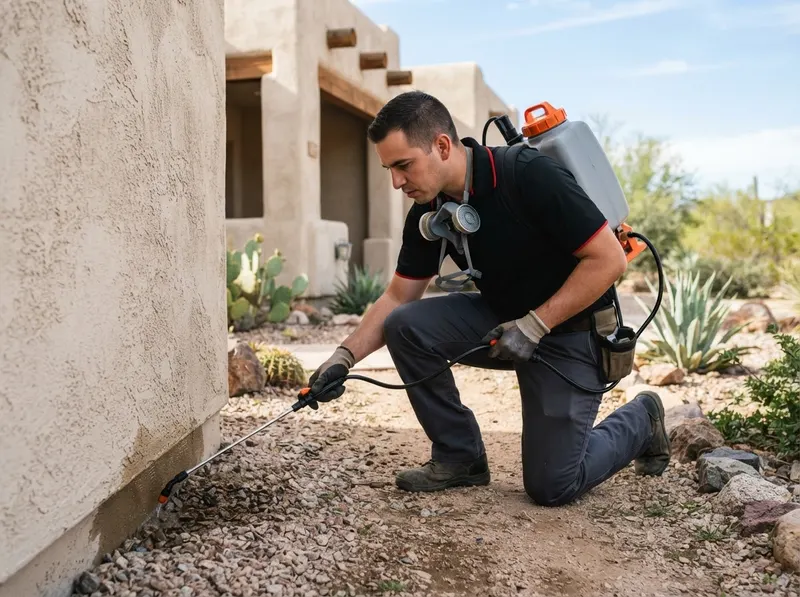
Formulated specifically for the venomous Arizona bark scorpion (Centruroides sculpturatus), this service establishes an exterior residual perimeter treatment around foundations, structural stem walls, and weep screeds. Technicians identify nocturnal harbor zones in decorative rock landscaping, river rock beds, and masonry block walls. Application utilizes heat-stable microencapsulated products that adhere to smooth desert block walls and remain active even during peak summer pavement temperatures exceeding 140 degrees Fahrenheit. Service includes blacklight diagnostic verification to evaluate active juvenile and adult populations.
Get a quote →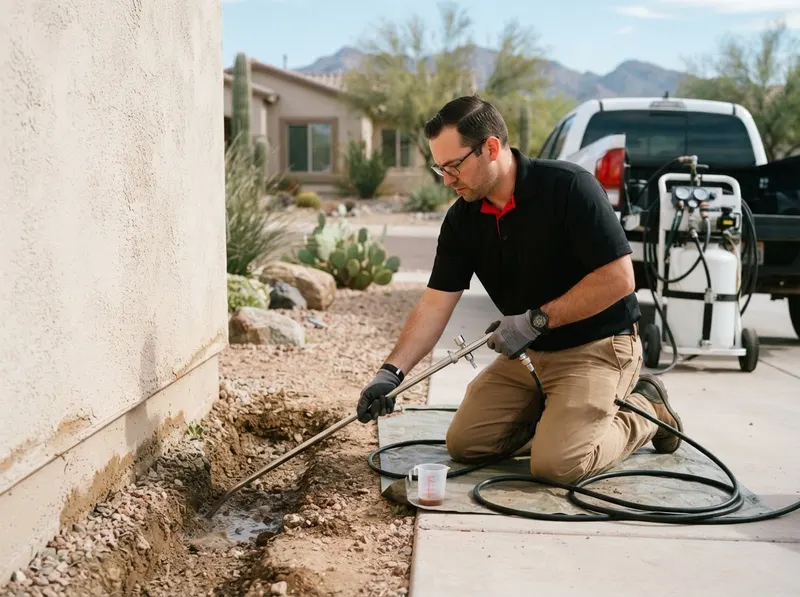
Subterranean termites (Heterotermes aureus) construct exploratory mud tubes through concrete expansion joints, plumbing penetrations, and perimeter stem walls to reach structural wood. This treatment establishes a continuous non-repellent chemical barrier around the entire perimeter foundation. Technicians dig narrow soil trenches along the foundation perimeter and drill through adjoining concrete slabs or patios where necessary to inject termiticide into dry, compacted caliche soil strata. The non-repellent chemistry transfers through social grooming across the termite colony for complete eradication.
Get a quote →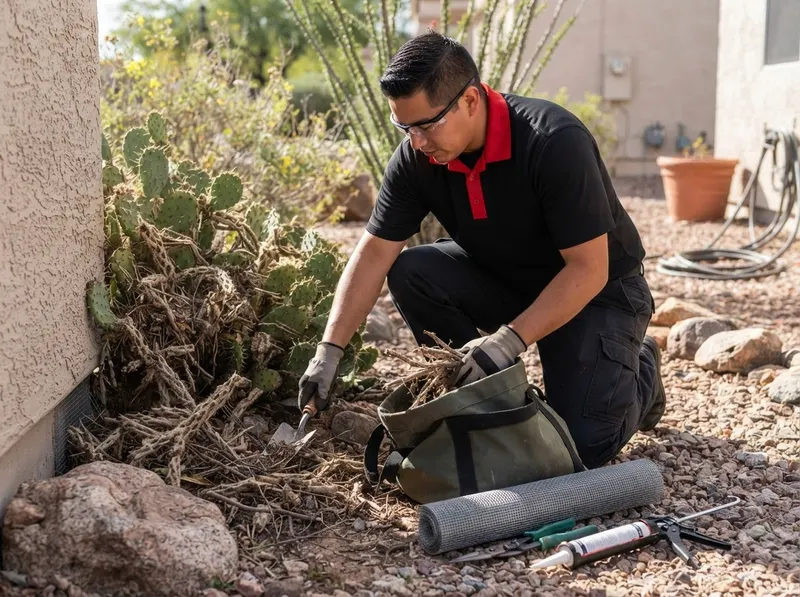
White-throated woodrats (Neotoma albigula), commonly known as pack rats, harvest cactus pads, debris, and structural insulation to construct large middens under pool heaters, inside HVAC compartments, and beneath car hoods. Technicians mechanically dismantle exterior nests, sanitize urine-soaked territory markings to eliminate pheromone attractants, and install 1/4-inch galvanized hardware cloth over mechanical entry cavities. Exterior monitoring stations secure vulnerable ground utility points against re-infestation without using uncontained rodenticides that risk secondary poisoning to desert wildlife.
Get a quote →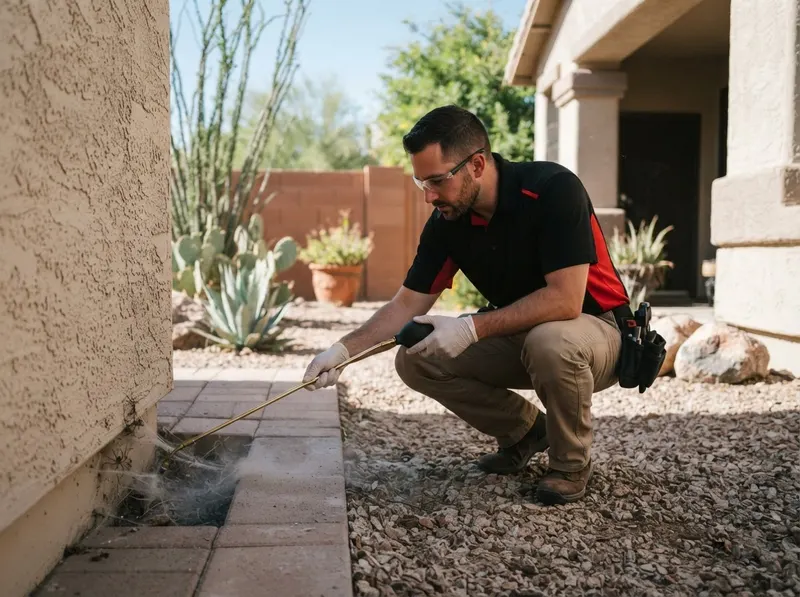
Targeted eradication for Western black widows (Latrodectus hesperus), brown spiders, desert centipedes, and wind scorpions nesting near residential thresholds. Treatment targets cool, shadowed recesses including water meter boxes, irrigation valve vaults, patio roof eaves, garage corners, and storage sheds. Technicians sweep away structural webs and egg sacs using specialized brushes treated with repellent dusts, followed by targeted contact applications in exterior crevices to disrupt reproduction cycles before newly hatched spiderlings disperse into indoor living spaces.
Get a quote →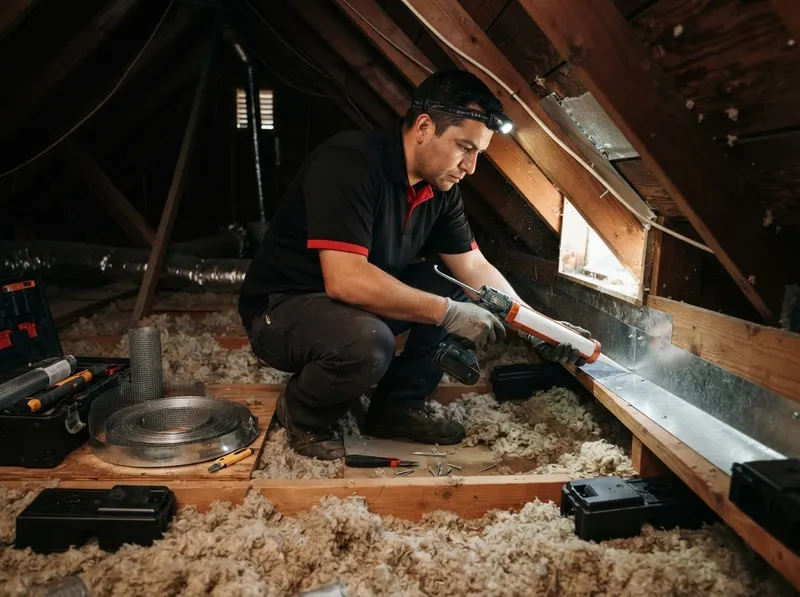
Roof rats (Rattus rattus) exploit mature citrus trees, palm trees, and overhead power drops to gain access to tile roofs, attic spaces, and soffit voids. This protocol begins with a comprehensive structural inspection of exterior rooflines, plumbing stacks, dormer vents, and clay tile caps. Technicians set mechanical snap-trapping runs inside attic runways to rapidly remove the active population, followed by sealing exterior perimeter roof entry gaps larger than 1/2-inch using chew-proof metal flashing, copper mesh, and elastomeric sealants.
Get a quote →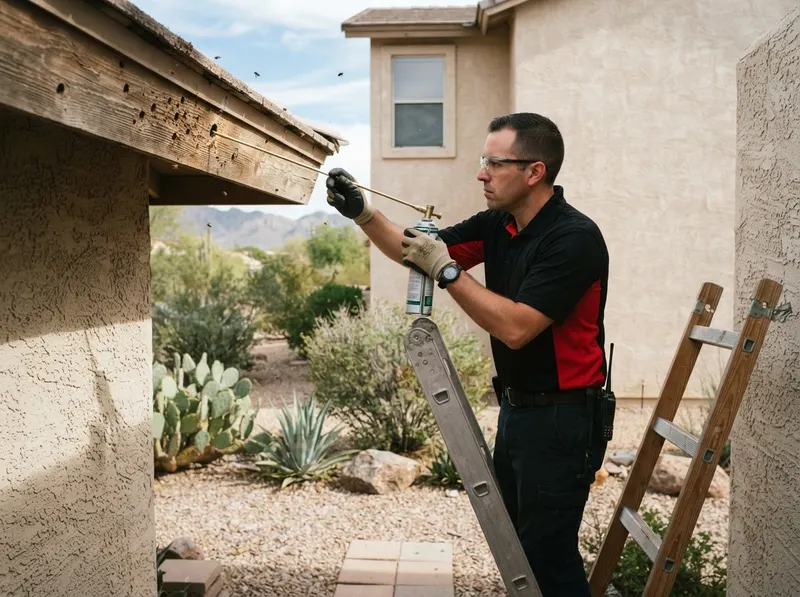
Sonoran desert carpenter bees bore structural tunnels through exterior fascia boards, exposed vigas, and cedar pergola beams, while paper wasps and yellow jackets establish colonies under stucco eaves. Technicians treat active wood galleries directly with pressurized desiccant insecticidal dust to eliminate larvae and nesting adults, sealing the drill holes with wooden dowels to stop re-entry. Open-air wasp combs are neutralized with rapid knockdown contact applications, then scraped clean to deter secondary hive-building.
Get a quote →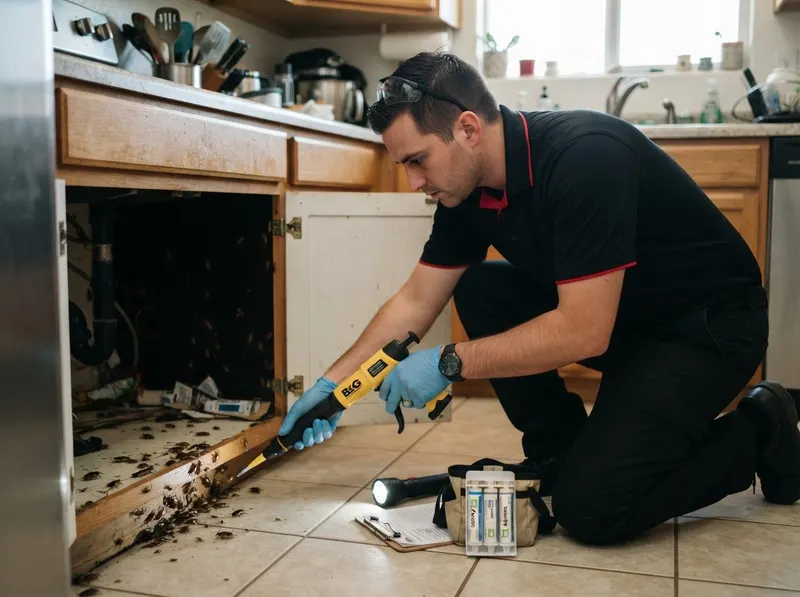
Outdoor Turkestan cockroaches swarm municipal water meters, decorative gravel, and sewer cleanouts before infiltrating foundation weep screeds during summer monsoons, while German cockroaches colonize warm indoor motor housings and under-sink plumbing. Technicians deploy a dual approach: exterior weather-resistant granular baits and residual liquid barriers along foundational perimeters, paired with precision indoor gel-baiting and insect growth regulators (IGRs) to halt egg development and break the reproductive nymph cycle.
Get a quote →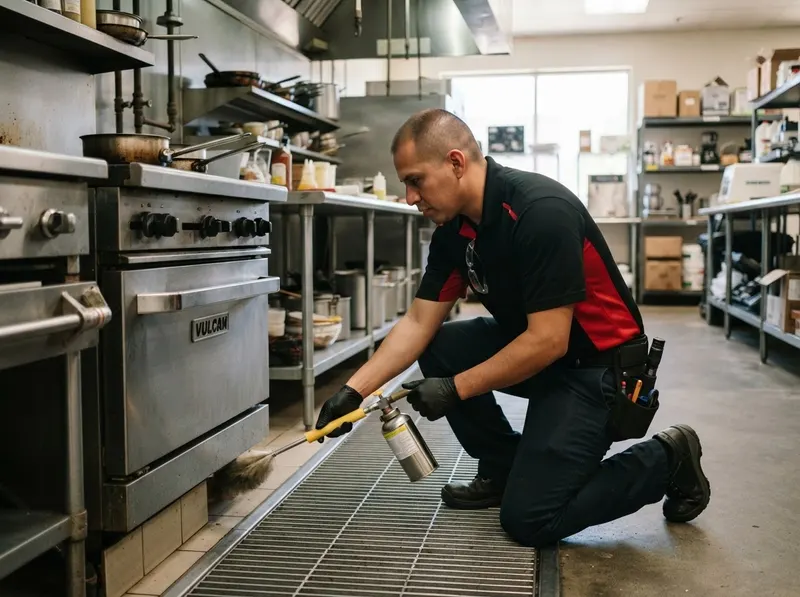
Tailored structural defense designed for Tucson commercial kitchens, food processing facilities, and storage warehouses vulnerable to stored-product pests, flies, and rodents. Service includes crack-and-crevice treatments around floor drains, grease interceptors, and pallet storage racks, paired with detailed digital monitoring logs that satisfy Pima County Health Department health inspection protocols. Treatments are scheduled after operating hours to protect food preparation surfaces and raw inventory.
Get a quote →You get a firm, itemized quote for your pest control sevice before any work begins, no surprises, no pressure.
Careful prep, tidy work, and a full cleanup when we are done. We treat your home and belongings like our own.
The same trusted, background-checked team from the first call to the final check.
Selecting the appropriate exterior or interior management plan depends directly on pest species biology, property construction type, and seasonal pressure. If you detect subterranean termite mud tubes or pinhole drywall damage along interior baseboards, choose continuous soil trenching and foundation drilling; if your structure harbors localized wood-destroying pests in attic rafters, choose targeted structural drywood spot treatments. The trade-off is higher initial labor and drilling complexity versus localized chemical exposure.
If you experience venomous bark scorpions or desert spiders entering living areas, choose microencapsulated perimeter barrier treatments applied along exterior stem walls, window ledges, and weep screeds; if you face nocturnal pack rats chewing engine wiring harness units or nesting inside HVAC compartments, choose mechanical exclusion sealing combined with exterior tamper-resistant bait stations. The trade-off is mechanical hardware installation costs versus ongoing exterior application maintenance. For recurring general pests, quarterly on-demand visits prevent indoor migration while bypassing mandatory 12-month recurring contracts, trading automated continuous calendar billing for homeowner-scheduled flexibility.
Every project gets a firm, written price after a free on-site visit. Ranges below for orientation.
Tell us about your pest control sevice job and we'll send a clear, written quote, usually the same day. Or just call and talk to a real Tucson pro.
(520) 652-3827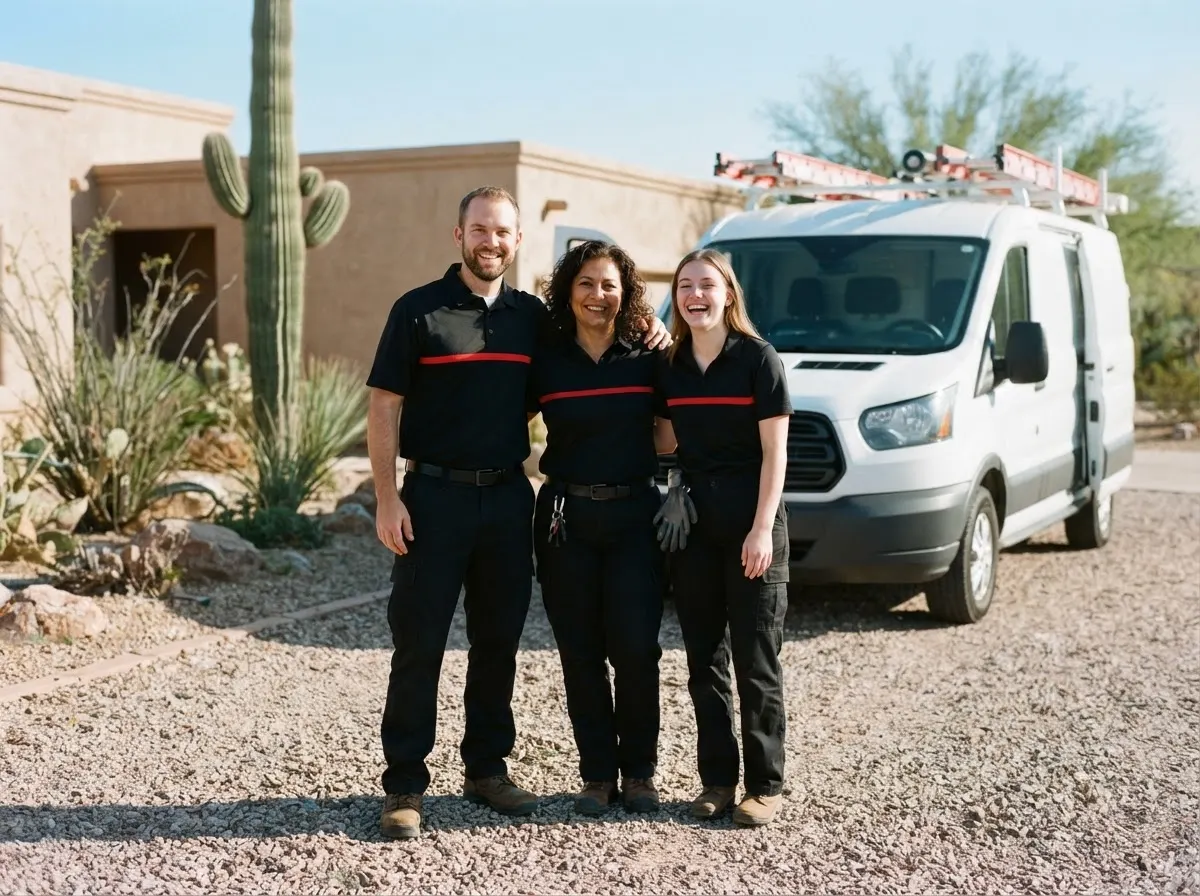
Properties built near the base of the Santa Catalina Mountains or along washes feeding into the Rillito River encounter intense desert pest activity due to natural wildlife corridors. In historic neighborhoods like El Presidio, Dunbar Spring, Armory Park, and Sam Hughes, thick adobe walls and aging brick foundations provide sheltered voids where subterranean termites and Turkestan cockroaches flourish in caliche soils. Modern sustainable developments such as Civano and foothills properties near the Sabino Canyon Recreation Area demand targeted exterior barrier applications that survive 115-degree summer surface heat and monsoon deluges without contaminating native desert soil or harming domestic pets.
Free estimates for Tucson & the surrounding area.
 Crenvia Bug Specialists