Commercial kitchen operations around Armory Park, El Presidio, and along the Fourth Avenue corridor face severe pressure from American cockroaches and German cockroaches attracted to floor sinks, grease interceptors,…
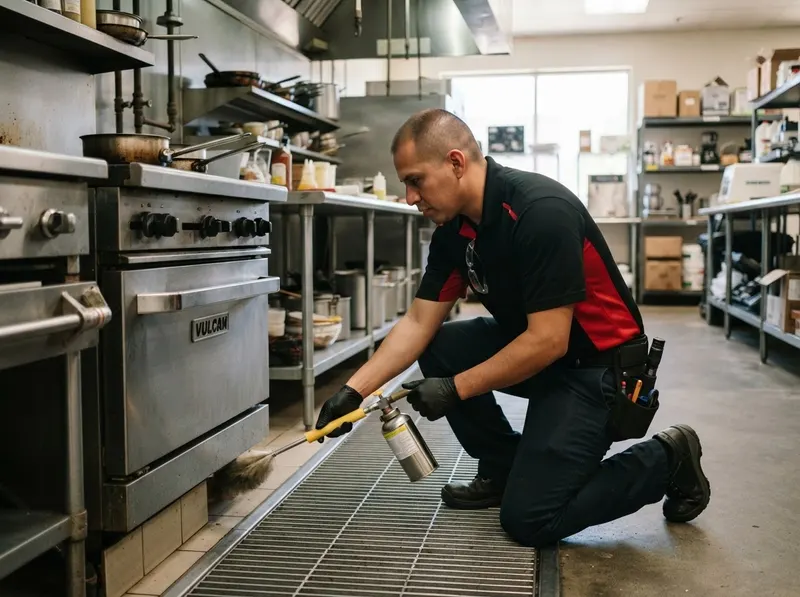
Commercial kitchen operations around Armory Park, El Presidio, and along the Fourth Avenue corridor face severe pressure from American cockroaches and German cockroaches attracted to floor sinks, grease interceptors, and high heat lines. Warehouse logistics hubs south of Interstate 10 and distribution bays near Broadmoor-Broadway encounter structural rodent invasions, where desert pack rats and roof rats gnaw secondary electrical wiring and nest within pallet racks. Crenvia Bug Specialists addresses these distinct commercial failure points through targeted Sonoran defense protocols rather than generic broadcast spraying. Routine retail kitchen treatments utilize micro-encapsulated formulations applied directly into baseboard voids, dry storage shelf supports, and plumbing chases, eliminating cross-contamination risks near stainless steel prep surfaces.
Selecting treatment scope depends on facility square footage and health inspection timelines. A dedicated restaurant kitchen line requires intensive physical drain bio-foaming and bait matrices targeting insect harborage behind dishwashing machines, whereas a 40,000-square-foot logistics warehouse in Dunbar Spring or Blenman-Elm requires exterior rodent baiting anchors every 30 to 50 linear feet along security fencing, paired with weather-sealed loading dock brush sweeps. The operational trade-off centers on treatment frequency versus physical exclusion investments: businesses that install heavy-duty door sweeps and seal wall penetrations can maintain compliance with bi-monthly visits, while older adobe or unsealed masonry structures in historical districts require monthly perimeter monitoring to intercept pests moving in from dry desert washes.
Treatment applications strictly respect local desert ecology and human safety. Inside food handling zones, non-volatile baits and physical insect pheromone traps replace broad aerosol discharges, allowing walk-in coolers, dry stock, and dining rooms to operate without food contact disruptions. For properties bordering natural vegetation in the Catalina Foothills or Civano, exterior rodent baiting and scorpion barriers prevent native species from penetrating storage loading zones while avoiding toxicity risks to local desert wildlife. Facility managers receive verifiable service documentation detailing product application quantities, EPA registration numbers, and active trap metrics directly after each inspection to satisfy Pima County environmental health records on demand.
Every job gets a firm, written price after a free on-site visit.
Tell us about your commercial kitchen and warehouse pest defense job in Tucson and we'll send a clear, written quote, usually the same day.
 Crenvia Bug Specialists